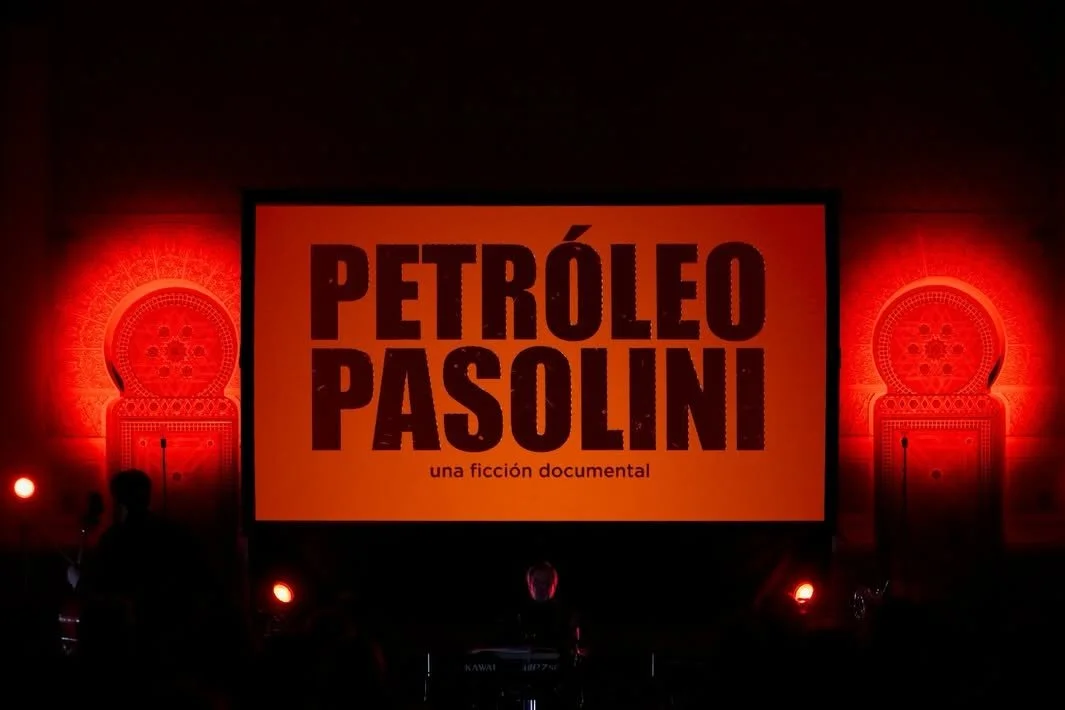
Pasolini, Petrolio. A documentary fiction.
“Petrolio is a wild beast; what remains of a mad, visionary, unclassifiable, and revelatory work. It is the chronicle of a process of knowledge and transformation. It is a way of becoming aware of the world and of experimenting with ourselves. Technically speaking: an initiation.”
This is how writer Emanuele Trevi describes Petrolio, the last work on which poet, filmmaker, and writer Pier Paolo Pasolini was working when he was murdered fifty years ago.
Published posthumously in 1992, Petrolio is a monumental fragment of what was intended to become a text of more than 2,000 pages. An encyclopedia of storytelling, “a modern Satyricon,” as Pasolini himself described it. It represents the culmination of the “contamination of styles” through which the poet defined his work: a work destined to overflow the boundaries of the novel and to be completed with photographs, sounds, recordings, and strange documentaries—elements intended to fill the deliberate gaps and narrative voids embedded within the text.
The work took shape during Italy’s Years of Lead, a period in which more than 400 people—including politicians, journalists, and police officers—were assassinated. “I know. I know the names of those responsible for what they call a coup (which is in fact a series of coups established as a system for protecting power),” Pasolini wrote in 1974. Although he did not know every name, from the 1960s onward he investigated the links between the multinational ENI—particularly its president, Enrico Cefis—and the bombings in Italy, the far right, and the secret services.
In August 1975, the negatives of Salò, Pasolini’s final film, were stolen, together with films by Fellini and Damiani. A few months later, in the early hours of 2 November, while attempting to recover his film, Pasolini was brutally murdered at the Idroscalo of Ostia, the former seaplane base on the outskirts of Rome built during Mussolini’s regime to house Fascist seaplanes. “This image obsesses me: Pasolini fleeing on foot, pursued by something faceless that ultimately killed him. It is the emblematic image of this country,” wrote Alberto Moravia.
Petrolio is all of this, but above all, it is much more: an initiatory journey, a wild exploration of identity, and a vast portrait of late twentieth-century Italy—a country that, in Pasolini’s view, lost far more than it gained through its apparent modernization.
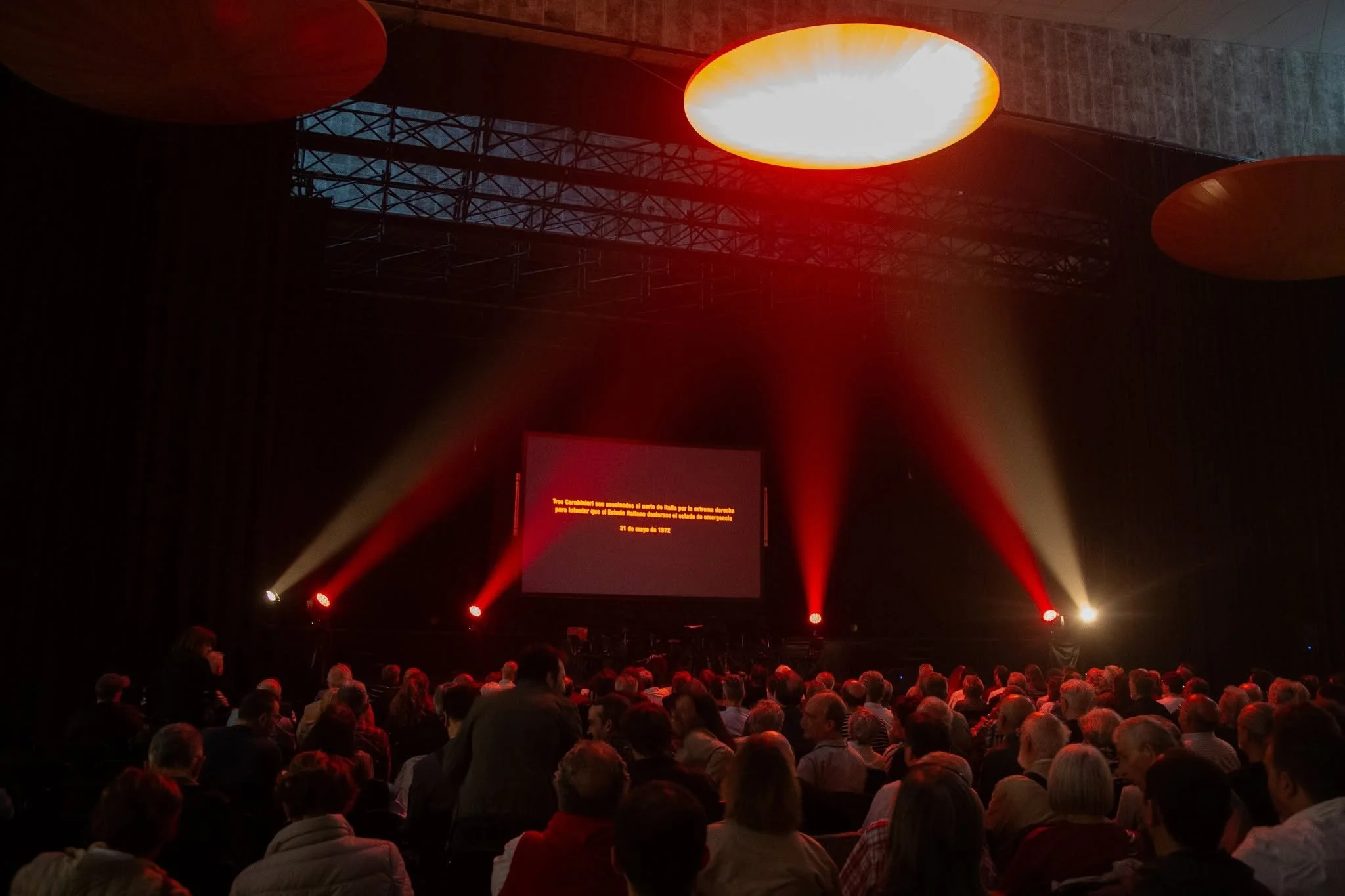
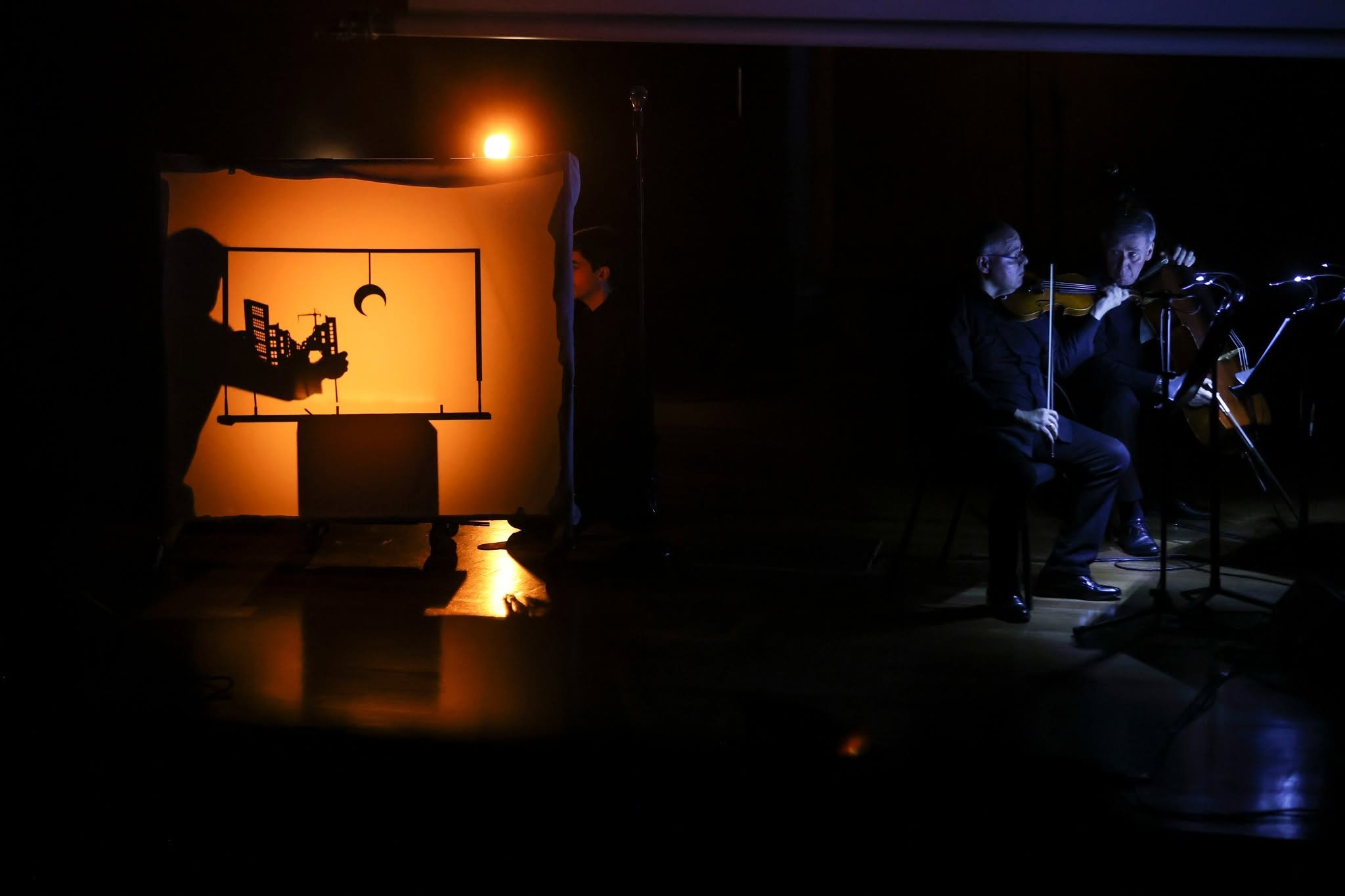
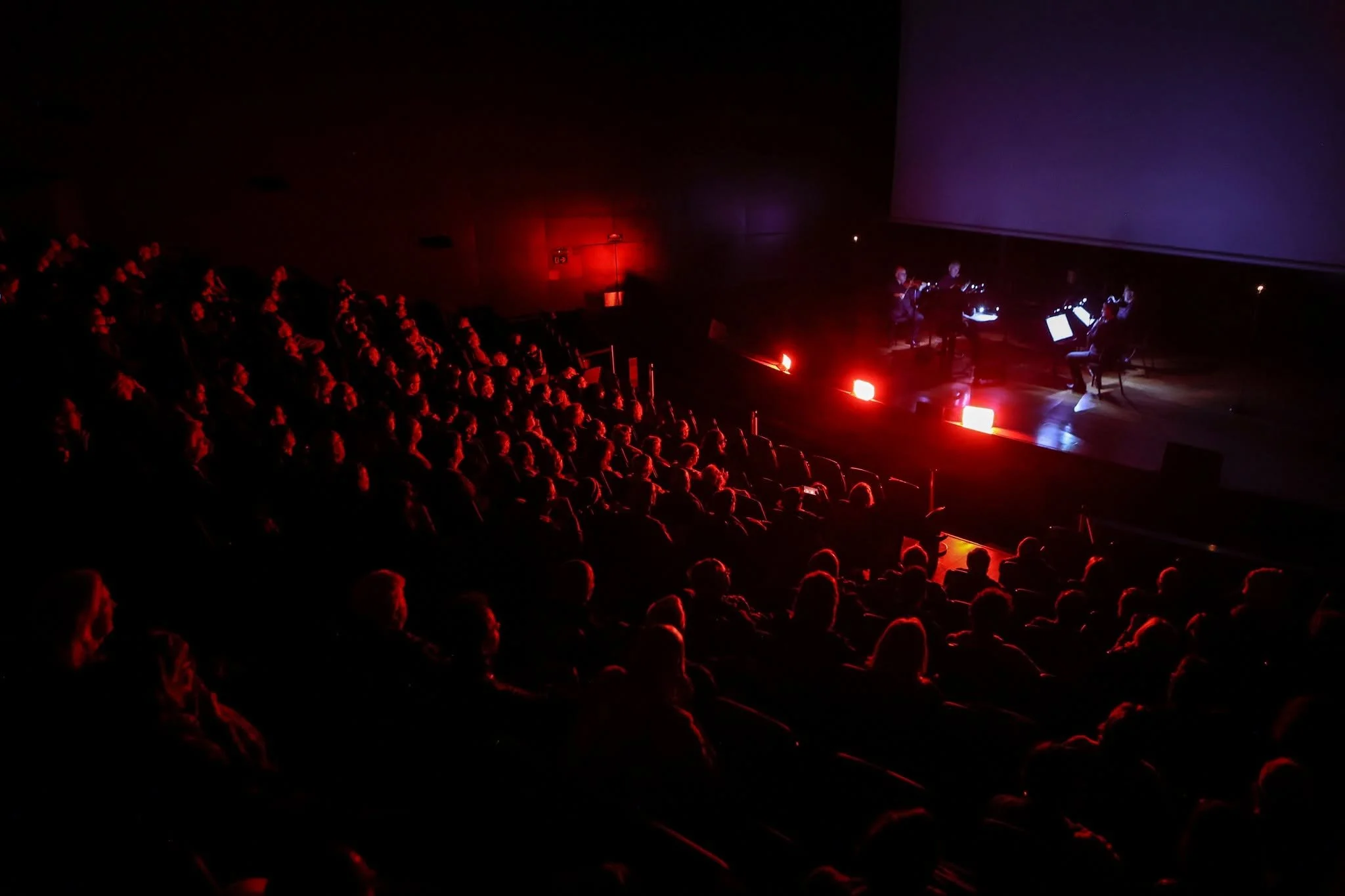
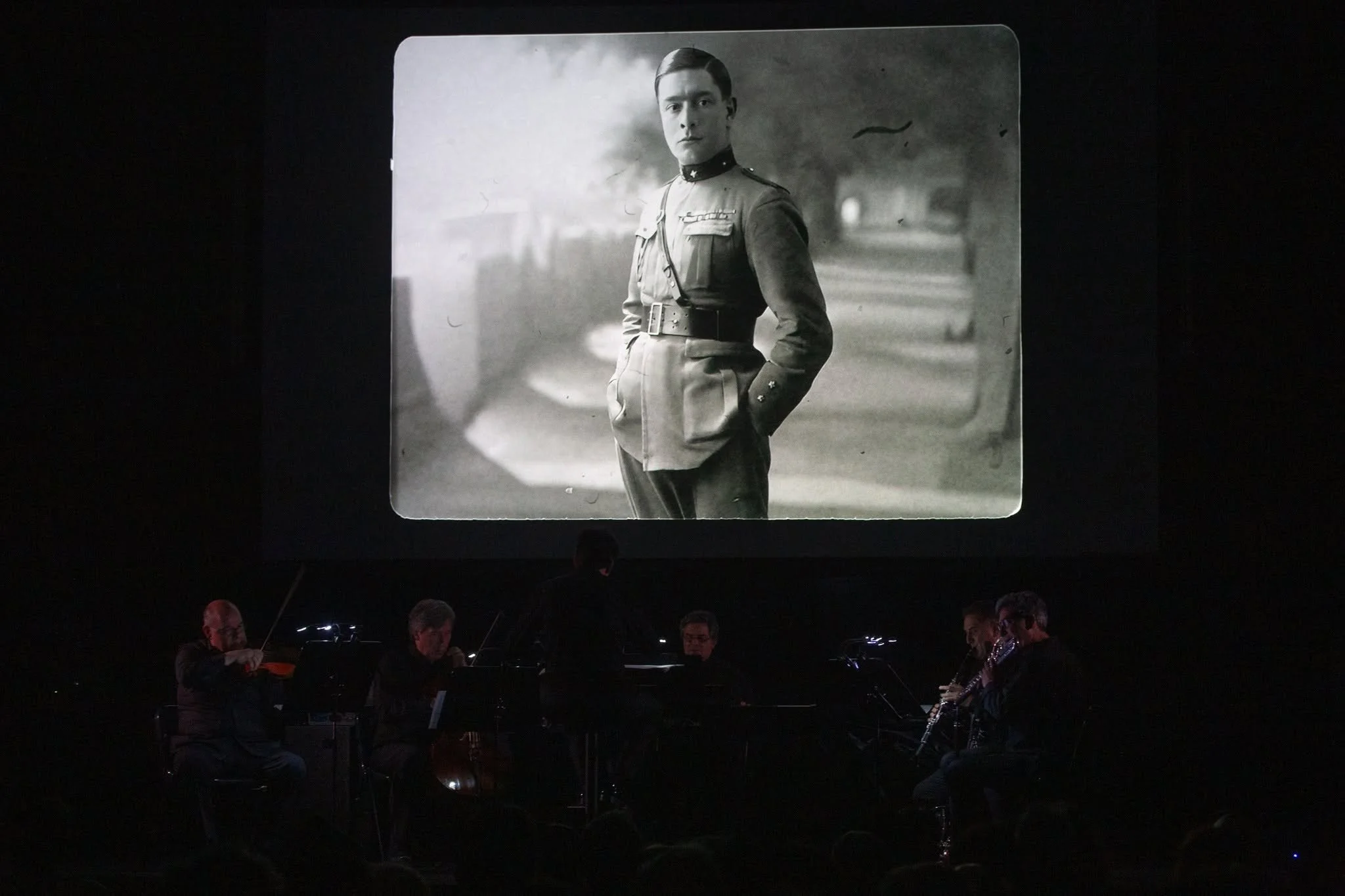
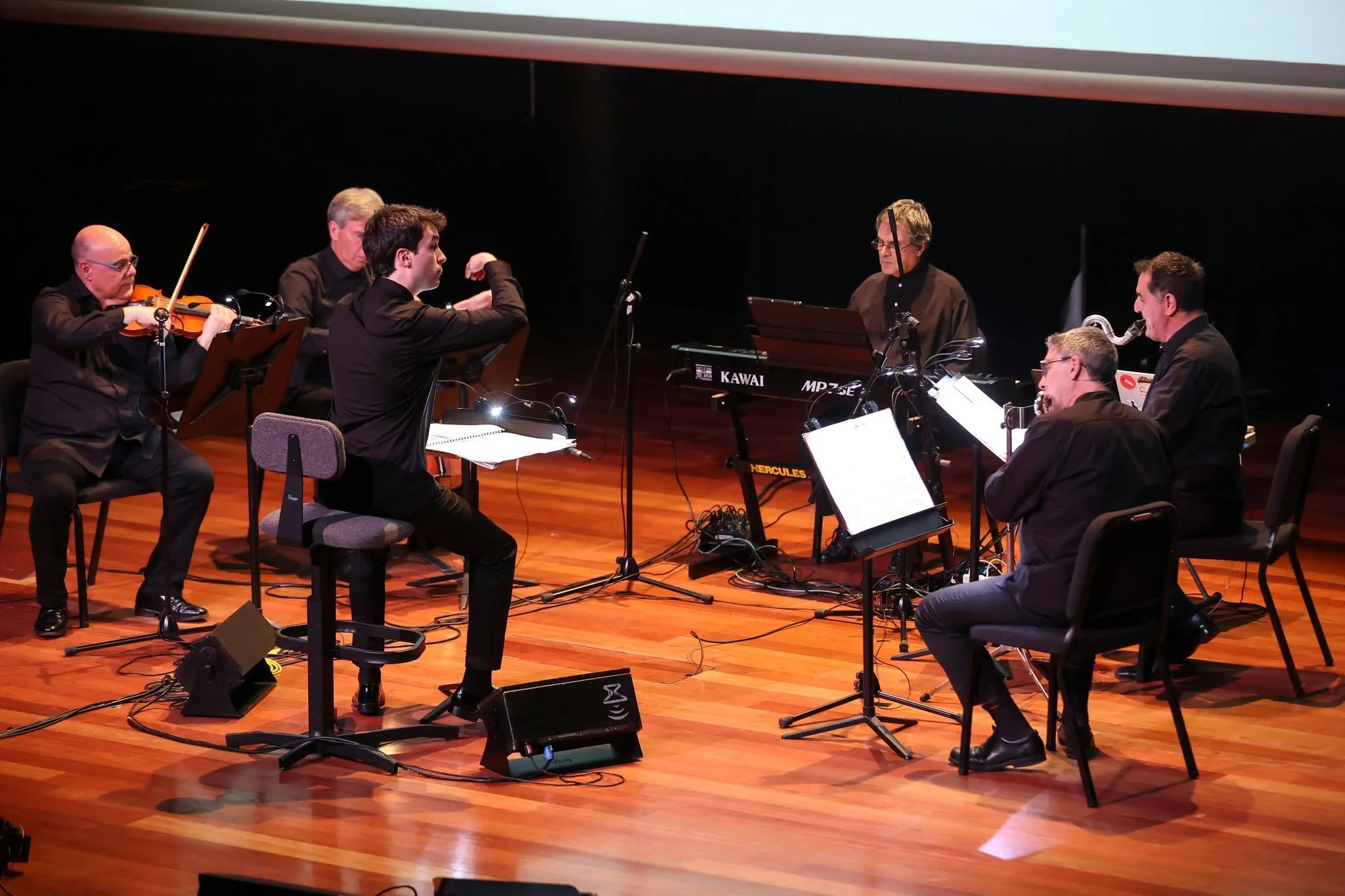
This newly created performance, adapted and conceived by Asier Puga with music by Carlos de Castellarnau, approaches the work through sound, aspiring to its original conception as a hybrid artwork in which language expands into the multimedia realm. Through a complex interplay between reality and fiction, it revisits one of the most fascinating works of the twentieth century.
Pasolini, Petrolio. A documentary fiction (2024-25)
Duration: 90 minutes
Languages: Italian (with subtitles) and Spanish
Artistic and technical team
Concept, adaptation and music direction: Asier Puga (based on Pasolini’s unfinished work)
Music Composition: Carlos de Castellarnau
Narrator: José Miguel Baena (with the collaboration of Lola Albiac)
Actor: George Marinov
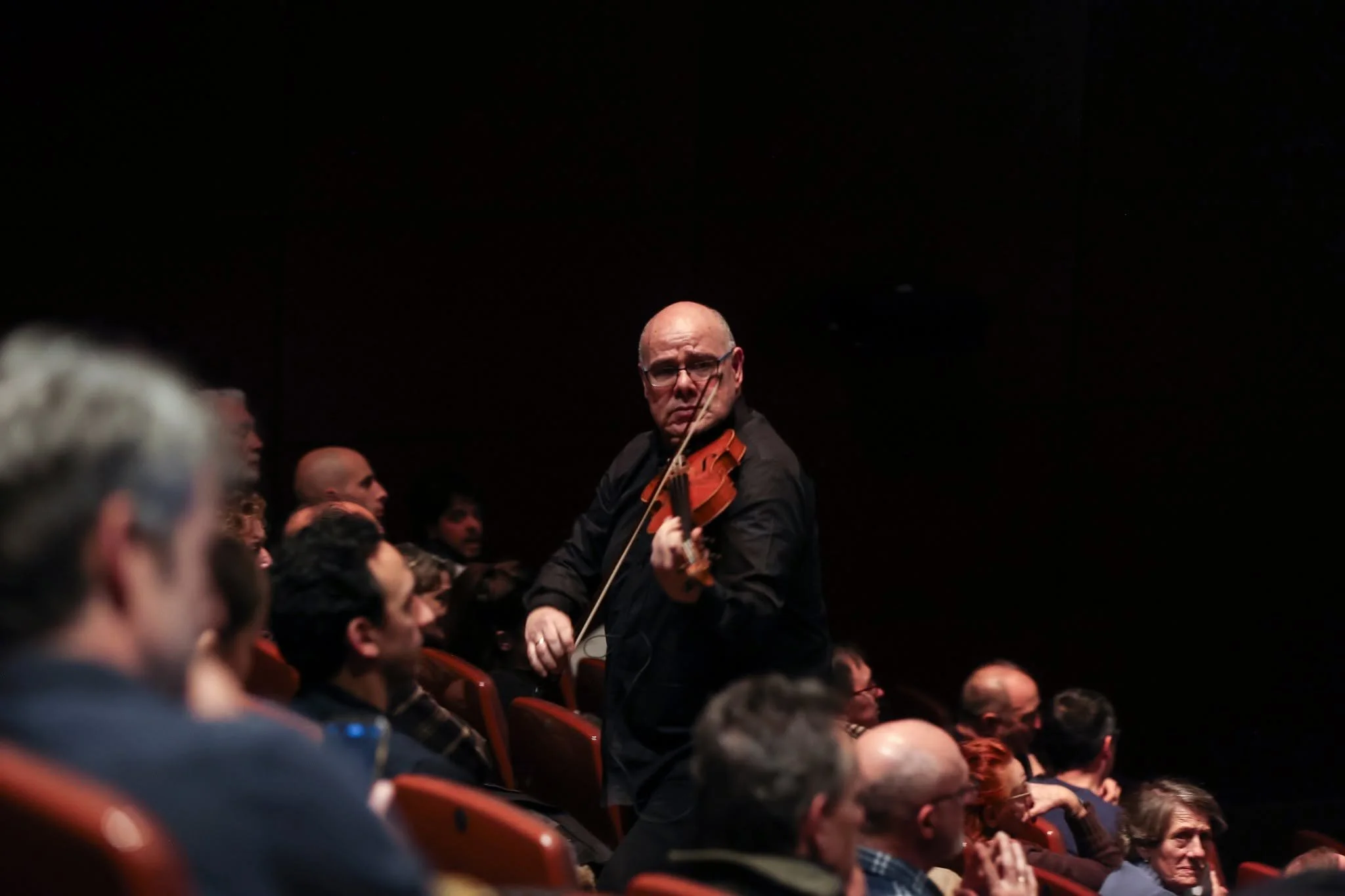
Grupo Enigma: Antonio Nuez (flute), Emilio Ferrando (clarinet), Víctor Parra (violin), Zsolt G. Tottzer (cello), Juan Carlos Segura (synthesizer)
Audiovisuals: Asier Puga and Javi Yond
Sound Engineer: Juanan Ros
Video Design, Animation, and Editing: Javi Yond
Lighting design: George Marinov
Translation: José Miguel Baena and Asier Puga
Production: Grupo Enigma
Co-production: Government of Aragón, National Centre for Musical Dissemination (CNDM), Italian Cultural Institute, Zaragoza Auditorium, and Grupo Enigma.
Acknowledgements: Graziella Chiarcossi and Matteo Cerami (members of Pasolini’s family), Silvia M. Gutiérrez, Giulia Cigna, Zaragoza Auditorium, Higher Conservatory of Music of Aragón, Guillermo Cobo, Raquel Belenguer, Christian Salamó, the Aljafería Palace.
Pictures
Commentaries
02/12/2025
“A magnificent, intense performance. [...] The members of Grupo Enigma are essential, demonstrating once again their extraordinary commitment to contemporary music. Víctor Parra’s performance was particularly dedicated and, in my opinion, outstanding; [...] as was the magnificent lighting design.”
“Carlos de Castellarnau’s music is exceptionally beautiful. It not only punctuates the narration, but is interwoven, combined, and seamlessly hybridized with it.”
“I would especially like to congratulate Asier, who has established himself over the years as one of the most interesting and important figures in contemporary music in our country.”
Fernando Castro Flórez (critic and philosopher) – Listen to the full review here
05/12/2025
“A provocation—once again successfully achieved—full of commitment. It focused on the Italy of those years, yet carries a universal and timeless resonance.”
“A performance in which narration, image, a degree of theatricality, and music converged, with the text taking center stage, enveloped in a visual and musical context that, like an extended soundtrack, shone both through its intense presence and through its even more dramatic absence.”
“The impact it achieved cannot be denied, at least for this writer, through a piercing assertiveness led, as I have said, by José Miguel Baena’s surgically precise narration, which transported us—not merely historically, symbolically, or metaphorically, but almost experientially—to the tragic Italy of the 1970s.”
RITMO Magazine – Luis Mazarro (critic) Read the full review here
02/12/2025
“It was a truly beautiful performance. I mean: intelligently beautiful. Also painfully beautiful.”
“The music by composer Carlos de Castellarnau (Tarragona, 1977), which accompanied the powerful images and videos we witnessed in a manner at once evocative, refined, and discreet, functioned like an affirmative and thoroughly contemporary basso continuo—music that was as assured as it was delicate.”
Luis Francisco Pérez (art critic and theorist)
28/11/2025
“Adapted by Asier Puga, Petrolio (the posthumous fragment of what was intended to become Pasolini’s monumental project) becomes a sensory experience that transcends the limits of traditional theatre. Through a complex interplay of words, music, and audiovisual elements, we witnessed a wild exploration of identity in 1970s Italy.”
“An initiatory journey—raw and filled with uncertainty—in which political violence, social transgression, and Pasolini’s obsessions unfold through a powerful staging. Carlos de Castellarnau’s original score, José Miguel Baena’s narration, and the participation of George Marinov immersed us in a disturbing world that, at times, challenged our perception of reality.”
“Petrolio is not merely a theatrical work or a concert: it is a hybrid experience, an invitation to rethink the world through the chaos and reflection that Pasolini left us. Last night, that experience was tangible and vibrant in every corner of the hall.”
La Madraza (Centre for Contemporary Culture, University of Granada)
Calendar
(Additional dates will be announced soon)
12 October 2026 - Encuentros de Pamplona, Auditorio Baluarte (Pamplona, Spain) Next!
1 December 2025 – Auditorio 400, Museo Reina Sofía, Centro Nacional de Difusión Musical (Madrid, Spain)
29 November 2025 – La Cárcel, Centro Nacional de Difusión Musical (Segovia, Spain)
27 November 2025 – La Madraza, University of Granada (Granada, Spain)
19 May 2025 – Zaragoza Auditorium (Zaragoza, Spain)